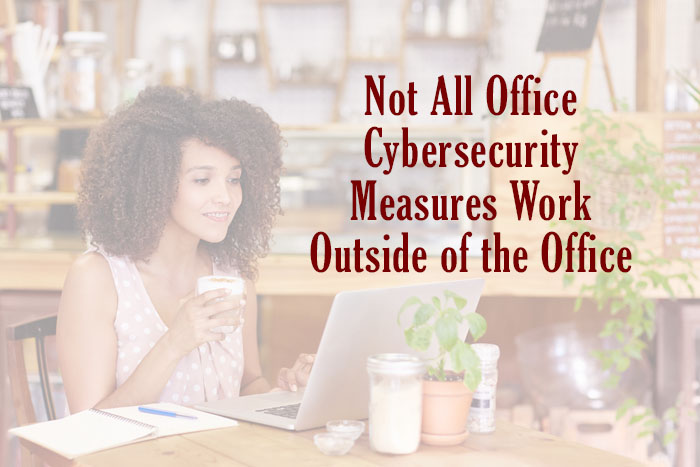
From email phishing links to fake pop-ups declaring an issue to password resets you didn’t request sent to your cellphone, cybercriminals are targeting us every day in many ways. Ideally, your business has implemented tools and technology to reduce cybersecurity risks to your network and machines. However, if you have remote workers, you have more cybersecurity risks than a business that has only office or site workers. It only takes one mistake by one remote worker to put your business at risk.
How Remote Workers Put Your Business at Risk
Although there are countless scenarios that we could share where remote staff has made a mistake and compromised a business, they generally fall into three categories.
- Poor Network Security – Whether they’re working from home or a coffee shop or hotel, the same protections are not in place as they are in your office where you have total control of the network.
- Use of Personal Devices – If staff works at home on their personal laptop or computer and transfers the file to the office network, it can potentially transfer whatever virus or malware they have, even if they don’t know they have something yet.
- Failure to Update Software – Software updates often include fixes that close vulnerabilities. When remote workers fail to install updates in a timely manner, they unknowingly create cybersecurity risks.
What Your Remote Workers Should Be Doing
There are some policies, protocols, and technology you can use to lower the chances of a cybersecurity issue caused by your remote workers. First, if you haven’t already implemented a password policy, implement that business wide. Then, add multifactor authentication. Your IT person or managed service provider should be able to do both for you if you haven’t already.
Next, make sure your remote workers understand the cybersecurity risks that come with using public Wi-Fi networks and ban that as part of your remote work policies. If they must connect outside of their home, using their phone as a hotspot is much more secure. Also, ask them to use a strong password on their home Wi-Fi with WPA2 enabled.
As a business you should supply antivirus software on all company machines. Finally, set up a virtual private network (VPN). Your remote workers can access emails and company severs through the VPN. This can help lower cybersecurity risks for not only the remote worker’s machine but also company data. If you don’t have a VPN set up, talk to your IT services provider about doing so. A VPN encrypts your data making it unreadable to hackers which is a great way to reduce data breaches with your remote workers.
Do You Need Help With a VPN or Other IT Services? Toucan Technology Group Can Help
Whether remote work is common at your company or an occasional option for your staff, you need to take steps to protect not only your business, but also your employees’ and customers’ data. If you want to know how well you’re protected, reach out to Toucan Technology Group for a free cybersecurity assessment and consultation in the greater Indianapolis area. Call us today at (317) 376-4874 or fill out our contact form and we’ll call you to schedule a consultation.
